
21
Aug
GERENSSA Launches Nationwide Data Collection to Evaluate the Results of the "Building Fairer Municipalities" Project
GERENSSA Launches Nationwide Data Collection to Evaluate the Results of the "Building Fairer Municipalities" Project
Having successfully led the Baseline study in 2024, as of this August (2026) we are deploying a technical operation across 94 municipalities in the country's 9 departments for the measurement of the Endline.
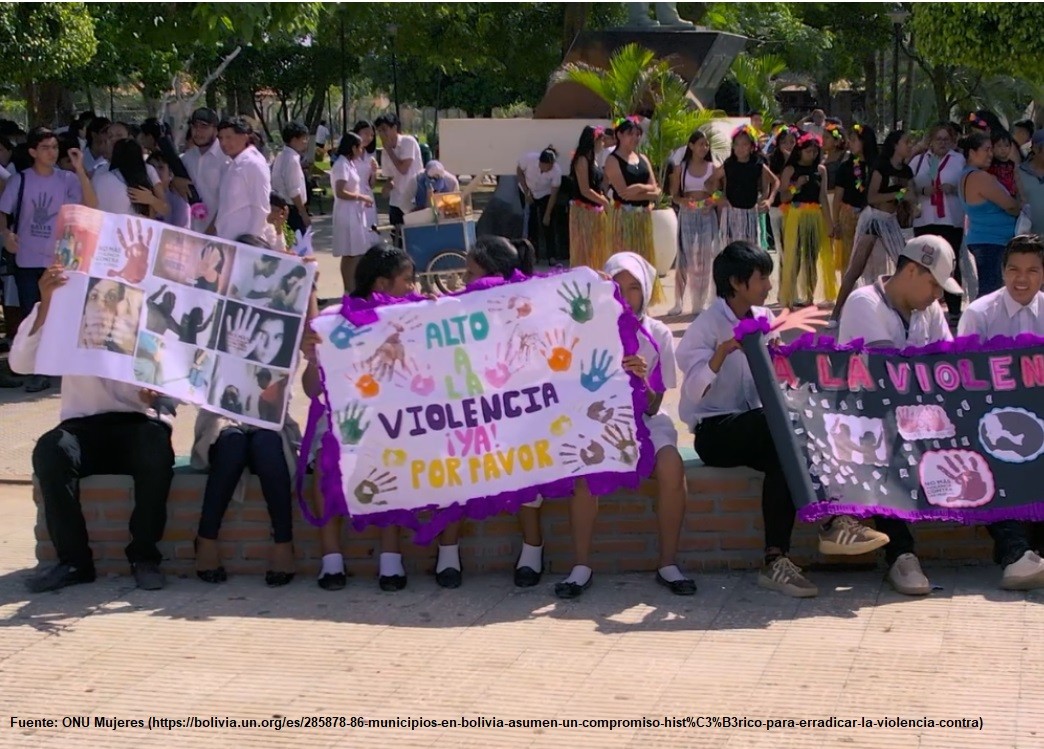
La Paz, August 2026. With a large-scale territorial operational deployment, the consulting firm GERENSSA S.R.L. has officially launched fieldwork for the measurement of outcome indicators for the Endline of the project "Building Fairer Municipalities" (whose official name is "Strengthening local capacities to improve access to social and justice services on gender-based violence"). This study is being carried out under a consultancy services contract with UN Women and is funded by the European Union in Bolivia. The project seeks to consolidate a technical, sustainable, and administrative response to combat gender-based violence by optimizing protection and health services throughout Bolivian territory.
Methodological continuity and technical expertise
For GERENSSA, taking on this challenge represents the consolidation of ongoing, highly specialized work in the sector. In 2024, we were already responsible for the design and implementation of the Baseline study for this same project, laying the methodological, statistical, and operational foundations that now make it possible to comparatively assess the changes attributable to the project's interventions. By maintaining methodological compatibility—using the same definitions and calculation structures—GERENSSA's team of analysts will be able to measure the evolution of critical indicators related to intimate partner violence, machismo, and women's safety in public spaces.
A challenging nationwide deployment
The current field operation constitutes a technical and logistical challenge spanning 94 municipalities across the country's 9 departments. This universe includes the 92 rural municipalities initially diagnosed in the baseline, to which the municipalities of Viacha (La Paz) and Sacaba (Cochabamba) have been added. To achieve this, GERENSSA has mobilized 16 field teams of surveyors nationwide; data collection will be carried out through the KoBoToolbox digital platform, which enables the recording of geo-referenced data both online and offline directly on mobile devices, facilitating real-time monitoring, minimizing errors, and ensuring full transparency and consistency of the field databases.
Comprehensive approach
Primary data collection will focus on three data-gathering techniques:
- Modular survey of beneficiary families: Administered to a representative sample of 2,943 families associated with the project's interventions (implemented by local partners such as ADDHH, CPMGA, CDD, ACOBOL, and Fundación Kallpa) to measure the prevalence of intimate partner violence and patriarchal patterns.
- Perception of insecurity in public spaces survey: Directed at 214 families in 6 key municipalities where advocacy and awareness-raising actions have been implemented.
- Satisfaction tests: Administered to users of municipal health and protection services (such as the Municipal Comprehensive Legal Services - SLIM and the Childhood and Adolescence Ombuds Offices - DNA) strengthened by the project, to assess the quality of care provided.
With this project, GERENSSA S.R.L. reaffirms its technical commitment to Bolivia's social development, providing reliable and statistically representative data to support the design of effective public policies for the eradication of gender-based violence and the empowerment of Bolivian women and girls.
(If you would like to learn more about the "Building Fairer Municipalities" project, visit the UN Women website: 86 municipios en Bolivia asumen un compromiso histórico para erradicar la violencia contra mujeres y niñas | Naciones Unidas en Bolivia)
Compartir